
Facial Trauma Care
Evaluation and surgical repair of jaw and facial fractures with a focus on restoring bite alignment, function, and facial balance.
What we treat
Facial trauma can involve the jaw (mandible), upper jaw (maxilla), cheekbone region, or teeth. Not every injury needs surgery—but when a fracture affects your bite, stability, or function, prompt evaluation matters.
Common causes of jaw and facial fractures
- Sports injuries and falls
- Motor vehicle collisions
- Workplace accidents
- Assault-related trauma
- Rarely, fractures can occur after complex dental extractions or other oral surgery when bone is already weakened
Why bite alignment matters
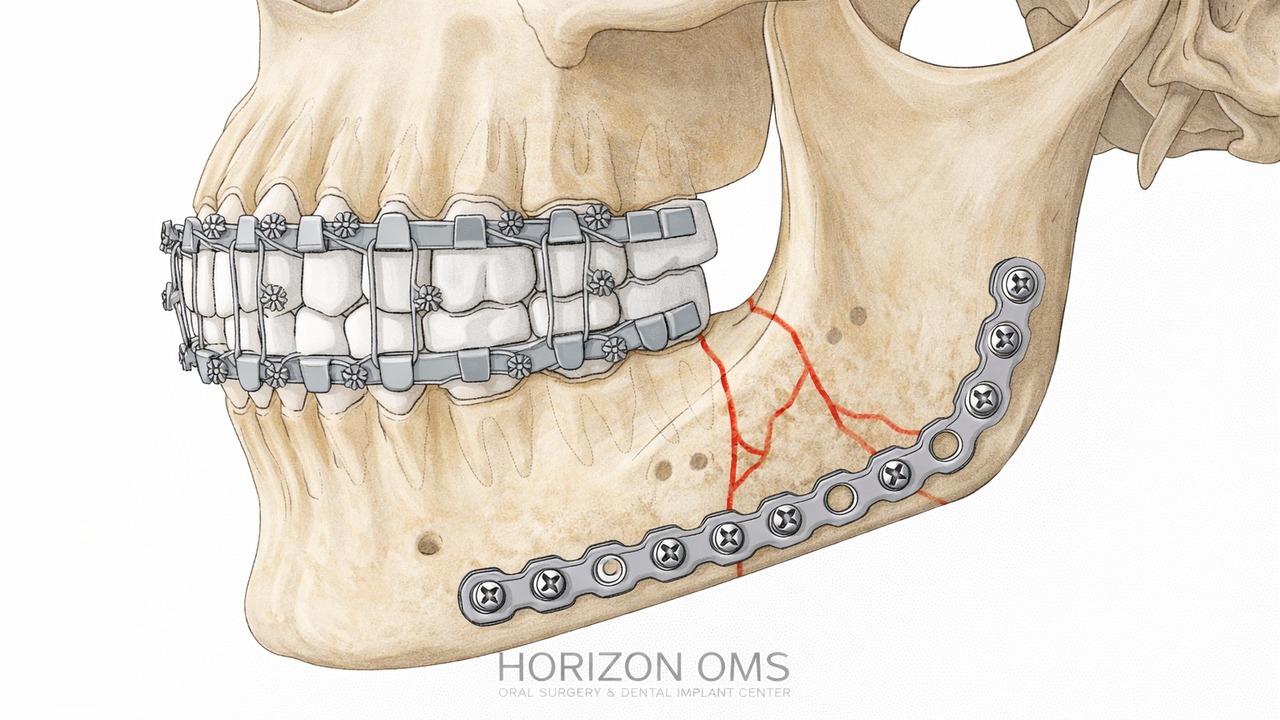
Unlike many other bones, the jaw is part of a moving system. A successful repair is not just “bones lined up”—it’s how your teeth meet and how your jaw functions when you chew and speak. Our training is built around restoring both skeletal position and dental occlusion.
How facial fractures are corrected
Treatment depends on the fracture pattern and your symptoms. Options may include:
- Closed treatment (no incisions): carefully guiding your bite with temporary elastic support in select cases
- Open reduction and internal fixation (ORIF): repositioning the fracture and stabilizing it with titanium plates and screws
- Tooth and soft-tissue care: managing chipped or displaced teeth and repairing lacerations when present
When surgery is recommended, the goal is stable fixation so you can heal safely while we protect your airway, nutrition, and comfort.
Diet and recovery
Even with plates and screws, the bone needs time to heal. A liquid or very soft diet is usually required early on to avoid stressing the fracture site. As healing progresses, we’ll help you advance your diet gradually.
Typical day-by-day expectations
- Days 1–3: swelling usually increases, bruising may appear, and you’ll rely on liquids/very soft foods.
- Days 4–7: swelling begins to level off and slowly improve; comfort typically improves with steady care.
- Weeks 2–6: early bone healing occurs—diet is advanced cautiously based on stability and symptoms.
- After 6 weeks: many patients begin returning toward a more normal diet; full bone remodeling continues for months.
How long does healing take?
Early bone healing is often around 6 weeks, with continued strengthening over the next 3 months (and beyond). The exact timeline depends on fracture type, location, and overall health.
Hardware and long-term expectations
Titanium plates and screws are typically designed to remain in place. Hardware is usually not removed unless it causes an issue such as irritation or infection.