Coming Soon — Not Yet Open for Patient Care

Procedures

Botox for TMJ / Masseter

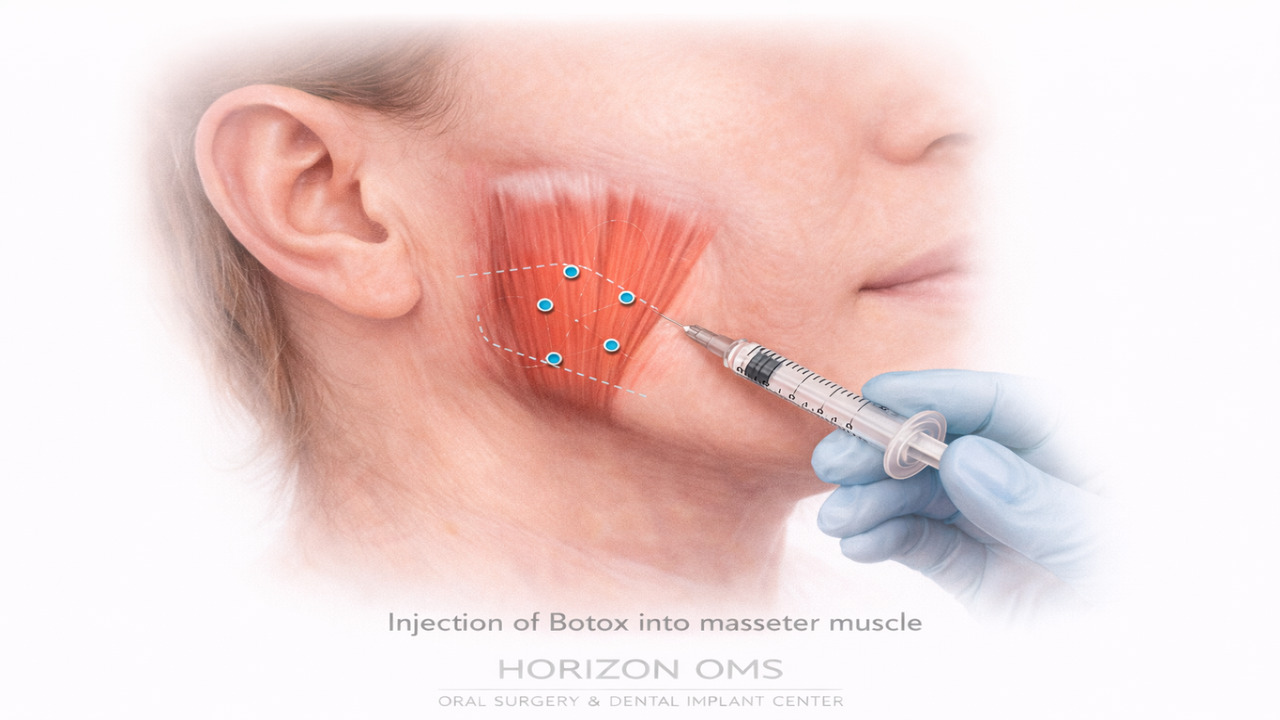
Botox can be a helpful adjunct for selected patients with clenching‑related muscle pain or masseter hypertrophy.
Botox for TMJ / Masseter

What is Botox for TMJ / masseter?

Botox (botulinum toxin) can be used to reduce overactivity in the jaw muscles—most commonly the masseter and sometimes the temporalis—when muscle tension and clenching contribute to pain, tightness, or spasm.

Who may benefit

  • Patients with clenching-related jaw pain or muscle fatigue
  • Masseter hypertrophy (enlarged jaw muscles) associated with bruxism
  • Recurrent muscle spasm contributing to facial pain patterns

Botox is not the right tool for every TMJ diagnosis, so evaluation matters.

How it fits into TMJ management

Botox is often used as part of a broader plan that may include occlusal appliance therapy, physical therapy, habit modification, and management of contributing dental factors. When appliance therapy is indicated, we coordinate with your restorative dentist.

What to expect

Treatment is performed in the office and typically takes only a few minutes. Results build over several days, with peak effect often within 1–2 weeks.

Safety & aftercare

Most patients return to normal activities right away. Temporary chewing fatigue, mild bruising, or subtle smile changes can occur, depending on anatomy and dosing. We use conservative dosing and precise placement to minimize risk.

Frequently asked questions

What can Botox help with in TMJ management?

Botox may reduce muscle overactivity in the masseter/temporalis muscles, helping with clenching-related pain, muscle spasm, and tension-type symptoms in select patients.

How quickly does it work and how long does it last?

Most patients notice improvement within several days, with peak effect around 1–2 weeks. Benefits commonly last about 3–4 months, though this varies.

Will Botox change my smile or chewing strength?

Temporary chewing fatigue or subtle changes can occur, especially with higher doses. We tailor dosing and placement to balance symptom relief with function.

Is Botox a substitute for a splint or bite therapy?

Usually not. Botox can be part of a broader plan that may include physical therapy, appliance therapy, and habit modification when indicated.

Is it safe?

When performed by trained clinicians, Botox is generally well tolerated. We review medical history, medications, and goals to ensure it’s appropriate for you.

Does insurance cover Botox for TMJ?

Coverage varies and is often limited. We can provide documentation, but many patients pay out of pocket depending on their plan.

How often can I have it repeated?

Treatments are typically spaced a few months apart. We reassess symptoms and function each visit to determine if ongoing treatment is beneficial.