
Procedures
Bone Grafting
Bone grafting and ridge preservation to support long‑term implant stability and predictable outcomes.
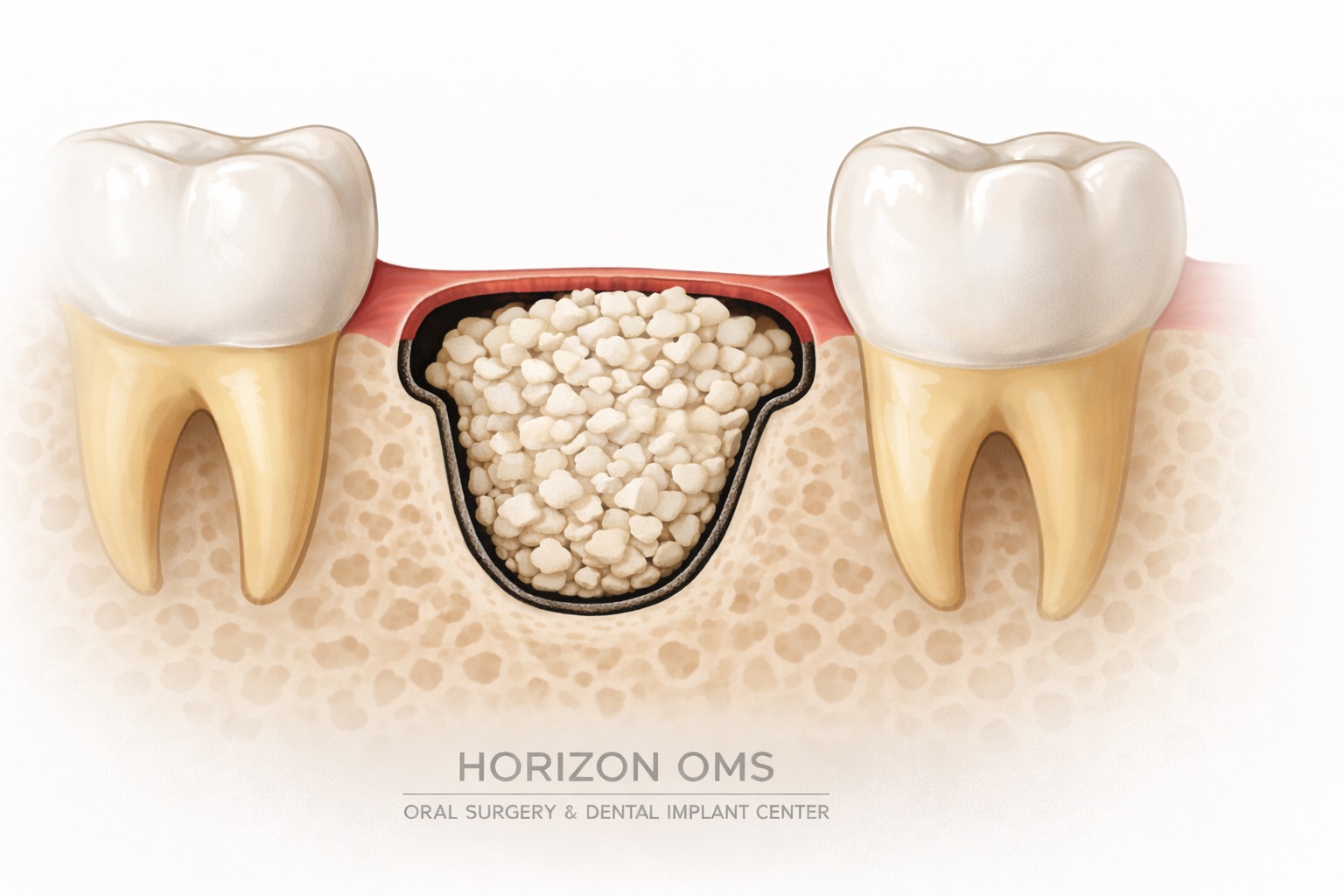
Why bone grafting matters
Bone supports the teeth and anchors dental implants. After an extraction, infection, or long‑standing tooth loss, the jawbone can shrink over time. Bone grafting helps rebuild or preserve bone so implants can be placed in an ideal, stable position.
Common situations we treat
- Ridge preservation at the time of extraction to reduce shrinkage and maintain contour
- Socket grafting when the extraction site needs added support for future implant placement
- Ridge augmentation to widen or rebuild areas of thin bone
- Site development before implants when bone volume is insufficient
- Sinus augmentation in the upper jaw when additional height is needed (see Sinus Lift)
What to expect
Your evaluation may include a CBCT scan to measure bone volume and anatomy. We’ll recommend an approach based on the site, the restorative plan, and your timeline. Many grafting procedures are performed comfortably with office‑based IV sedation, or with local anesthesia when appropriate.
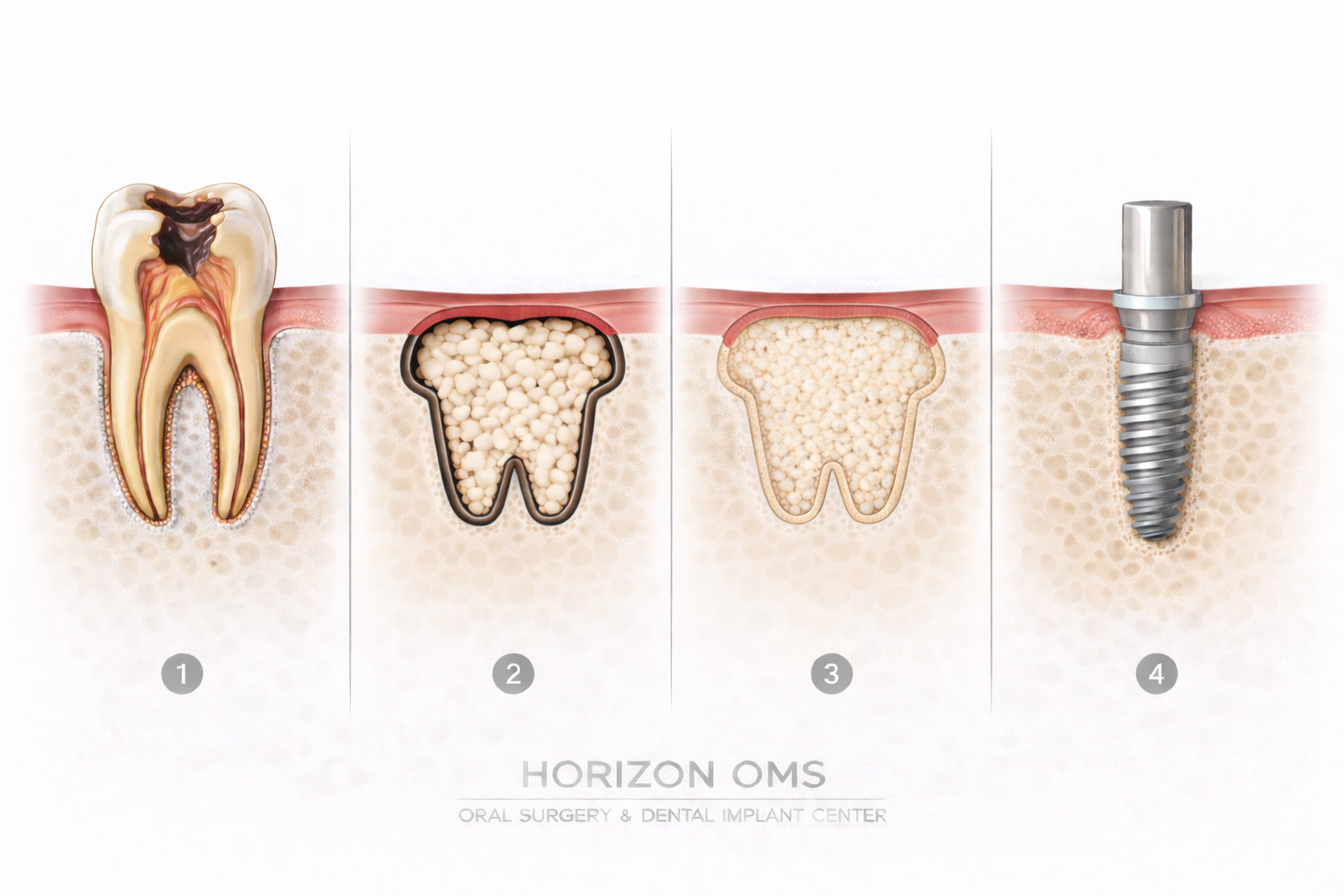
Healing & timing before implants
Bone grafting works by creating a stable scaffold for your body to form and consolidate new bone. The healing timeline depends on the size of the graft, the location, and your overall health. In many cases, implant placement is planned after the graft has matured and the site is ready for predictable stability.
We’ll review your specific plan and timeline at the consultation and coordinate with your restoring dentist when implants are planned.