Coming Soon — Not Yet Open for Patient Care

Procedures

Tori Removal

Tori are benign bony growths in the mouth. Removal may be helpful for comfort, healing, or denture fit.
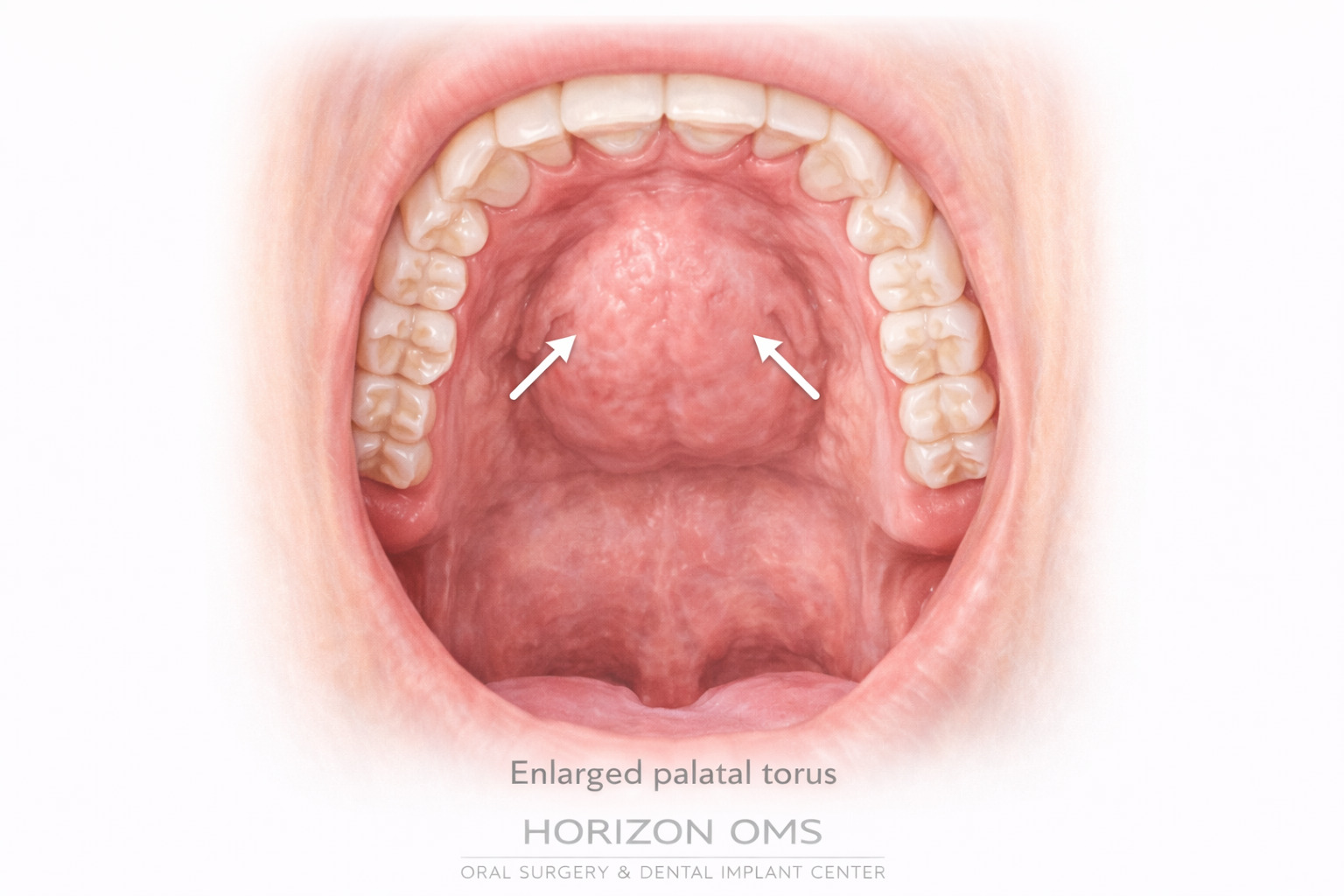
Palatal tori removal surgery for denture fit improvement Lombard IL

What are tori?

Tori are benign bony growths that can develop in the mouth—most commonly on the roof of the mouth (palatal torus) or on the inside of the lower jaw (mandibular tori).
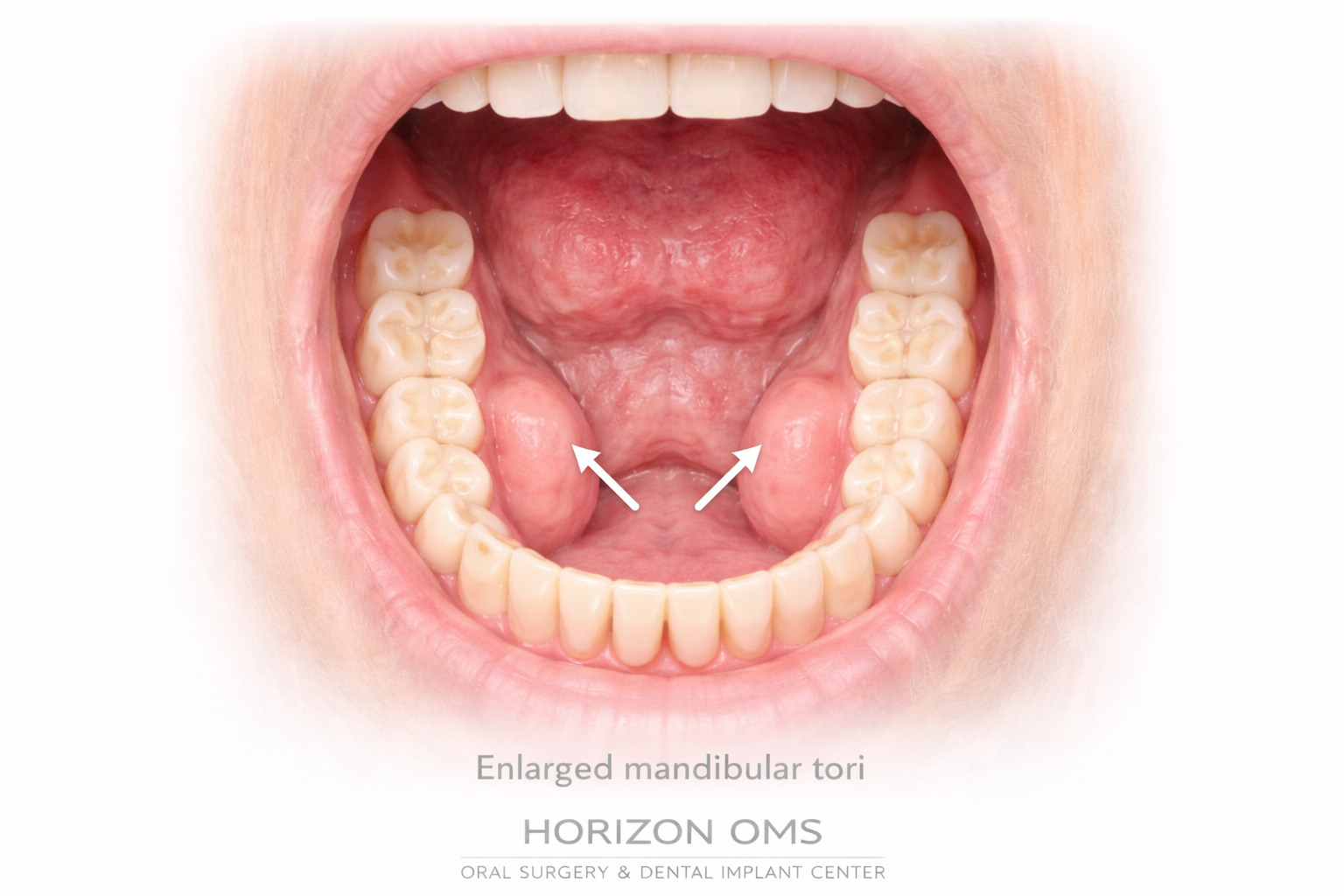
Mandibular tori removal illustration showing lower jaw bony growth removal

When removal is recommended

  • Interference with a denture, appliance, or restorative plan
  • Repeated irritation or trauma from chewing
  • Difficulty with speech, hygiene, or comfort
  • Limited space affecting other planned procedures

How tori removal works

Removal is performed with appropriate anesthesia options, commonly including office‑based IV sedation for comfort, or local anesthesia when appropriate. The bony growth is carefully reduced and smoothed, and the tissue is closed with sutures to support healing.

Recovery & aftercare

A soft diet is typically recommended initially. Swelling and soreness are expected for several days. We provide detailed post‑op instructions to reduce bleeding risk and support comfortable healing.

After Surgery: Review our general after-surgery instructions.

Frequently asked questions

What are tori?

Tori are benign bony growths in the mouth—most commonly on the roof of the mouth (palatal tori) or inside the lower jaw (mandibular tori). They are not cancerous.

Why would tori be removed?

Removal may be recommended if they interfere with speech, chewing, hygiene, cause recurrent ulceration, limit denture fit, or complicate dental procedures.

Is tori removal painful?

Soreness and swelling are expected, but most patients do well with prescribed medications and a soft diet. We’ll provide detailed instructions to keep you comfortable.

How long is recovery?

Initial healing typically takes 1–2 weeks, with continued smoothing and remodeling over the following weeks. Diet modification helps protect the area during early healing.

Will I have stitches?

Yes, tori removal typically requires sutures. Some sutures dissolve on their own; others may need to be removed at a follow-up visit.

Can the tori grow back?

Recurrence is uncommon but possible over time. If they return, it is usually slow and related to ongoing bite forces and individual biology.

Will insurance cover tori removal?

Coverage depends on whether it is considered medically/dentally necessary and your plan’s benefits. We can help provide documentation for preauthorization when needed.