
Procedures
Corrective Jaw Surgery
Surgical correction of jaw alignment to improve function, stability, and facial balance. Also known as orthognathic surgery.
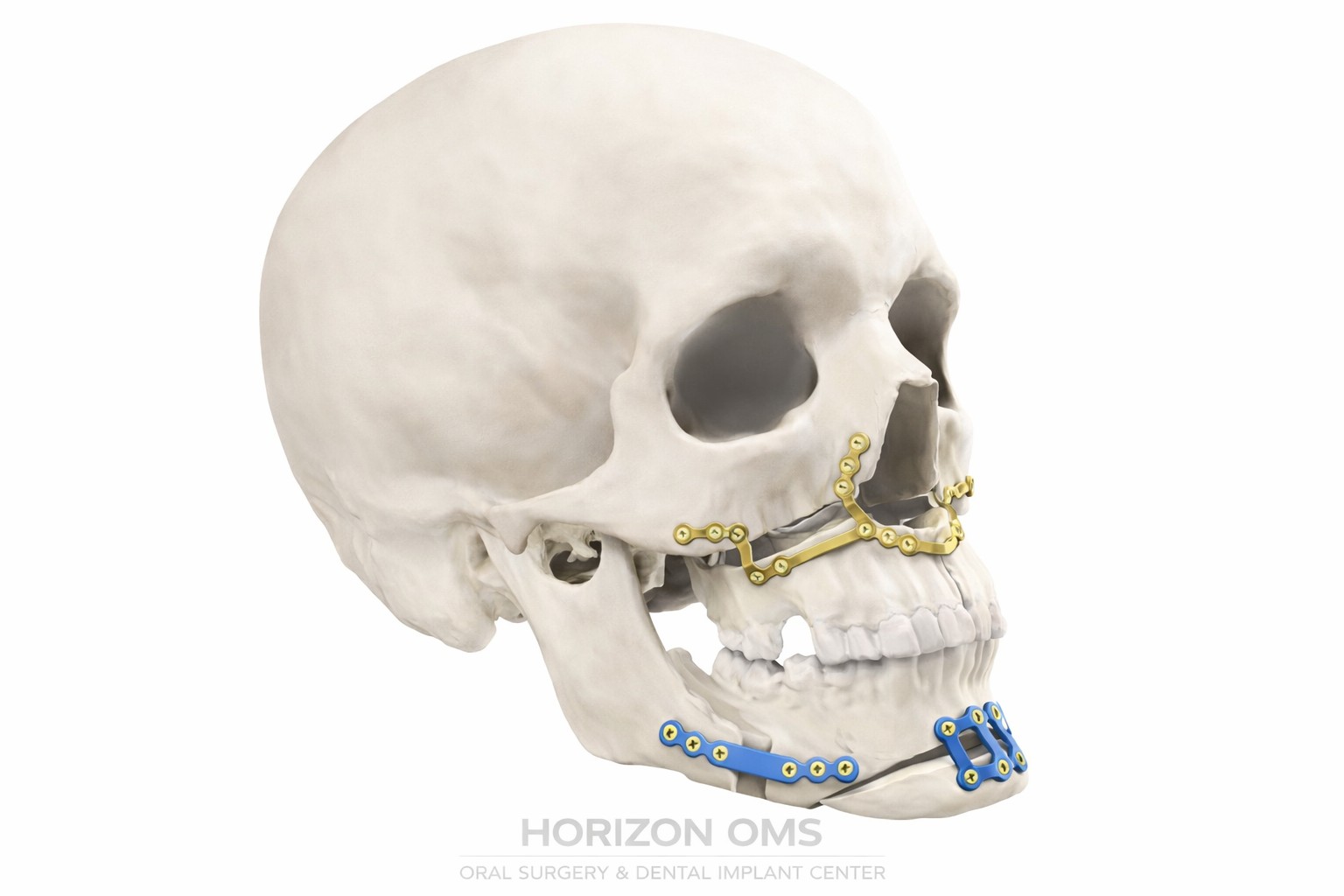
What is orthognathic surgery?
Orthognathic surgery is performed to correct skeletal discrepancies of the jaws that cannot be treated with orthodontics alone. It may improve chewing, speech, breathing, and facial harmony.
Single‑jaw vs. double‑jaw surgery
Orthognathic surgery can be performed on the upper jaw (maxilla), the lower jaw (mandible), or both jaws depending on the bite relationship, facial balance, and airway/functional goals.
- Single‑jaw surgery may be recommended when correcting one jaw provides a stable bite and balanced result.
- Double‑jaw surgery is considered when both jaws contribute to the discrepancy or when the most stable, predictable correction requires coordinated movements.
- Chin surgery (genioplasty) may be added in select cases to refine balance and function.
Planning typically includes CBCT imaging and digital simulation, and your orthodontist and surgeon coordinate timing and goals so the teeth and jaws finish in a stable position.
Common indications
- Difficulty chewing or biting
- Jaw asymmetry or facial imbalance
- Open bite or severe malocclusion
- Obstructive sleep-related breathing issues
Treatment planning
Successful orthognathic surgery requires close coordination between the oral surgeon and orthodontist. Planning often includes digital imaging, models, and simulation to guide precise surgical movements. In select cases, corrective jaw surgery may also be coordinated with TMJ joint procedures when indicated.
3D Virtual Surgical Planning (VSP)
When appropriate, we use 3D Virtual Surgical Planning (VSP) — a digital workflow that combines CBCT (3D CT) imaging, digital dental records, and computer simulation to plan the surgery before the operation. VSP allows us to preview jaw movements, help design surgical splints/guides, and translate the plan more precisely in the operating room. Reviews of VSP in orthognathic surgery report improved predictability and accurate transfer of the treatment plan compared with traditional methods.1,2
If your case involves complex asymmetry, airway considerations, or combined TMJ procedures, VSP can be especially helpful for coordinating jaw position and joint reconstruction. Learn more about surgical TMJ options on our TMJ Disorders page.
Surgery & recovery
Procedures are typically performed in a hospital setting under general anesthesia. Many patients stay overnight for monitoring, then continue recovery at home with a staged return to normal activity. Recovery involves a period of swelling, dietary modification, and close follow‑up with your surgical and orthodontic teams.